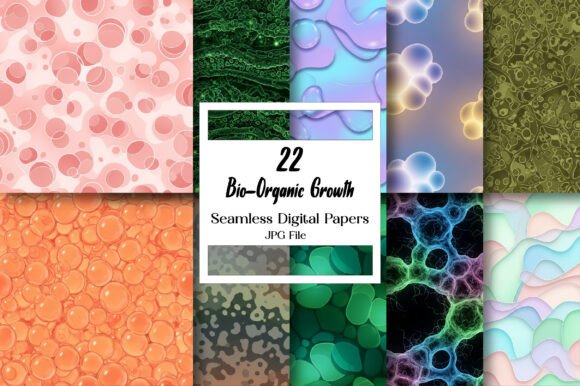
Bio-Organic Growth Patterns: A Unique Blend of Science and Art
Bio-organic growth patterns represent a fascinating intersection between scientific observation and artistic expression. These designs draw inspiration from the intricate structures found in nature, such as cellular formations, microbial activity, and the organic processes that shape life at a microscopic level. By translating these natural phenomena into visual forms, bio-organic growth patterns offer a unique aesthetic that is both scientifically grounded and artistically compelling.
Unlike traditional geometric or abstract patterns, bio-organic growth patterns often feature fluid, evolving shapes that mimic the way living organisms develop and interact. This results in textures and forms that feel dynamic, almost alive, making them ideal for projects that seek to convey a sense of movement, complexity, or biological authenticity.
What Makes Bio-Organic Growth Patterns Distinct?
One of the defining characteristics of bio-organic growth patterns is their seamless integration of organic elements with digital design. These patterns are typically created using a combination of scientific imaging techniques and graphic design software, allowing for high-resolution, scalable outputs that maintain clarity across different mediums. The result is a collection of textures and shapes that can be used in both digital and print formats without losing quality.
The patterns often incorporate elements like cellular structures, mycelium networks, and microscopic algae, which are rendered in ways that highlight their natural beauty while maintaining a modern, experimental edge. This blend of biology and art makes them particularly appealing for creative professionals who want to infuse their work with a sense of scientific curiosity and natural elegance.
Comparing Bio-Organic Growth Patterns with Other Design Styles
When considering bio-organic growth patterns, it's helpful to compare them with other design styles that share similar themes or applications. For instance, while abstract art focuses on non-representational forms, bio-organic patterns often have a more structured, science-informed approach. Similarly, compared to traditional organic patterns that may rely on floral or nature-based motifs, bio-organic designs emphasize microscopic and cellular elements, offering a more futuristic and experimental look.
In the realm of digital design, bio-organic growth patterns stand out for their ability to provide a unique, customizable aesthetic. Unlike stock patterns that may feel generic or overused, these designs offer a fresh perspective that can elevate the visual appeal of any project. However, they may not be the best fit for all creative needs, especially those requiring more straightforward or minimalist visuals.
Strengths and Best-Fit Situations
Bio-organic growth patterns excel in situations where a sense of depth, complexity, and natural authenticity is desired. They are particularly well-suited for projects that aim to convey a futuristic or experimental vibe, such as sci-fi branding, digital artwork, or editorial design. Their seamless nature also makes them ideal for use in fabric printing, packaging, and other applications where continuity and repetition are important.
For example, a music album cover that seeks to evoke a sense of otherworldly exploration might benefit from the use of bio-organic growth patterns. Similarly, a product packaging design that aims to communicate eco-friendliness or innovation could leverage these patterns to create a visually striking and conceptually relevant look.
Tradeoffs and Limitations
While bio-organic growth patterns offer many advantages, they may not be the best choice for every project. One potential limitation is their complexity—some designs may be too intricate or unconventional for certain audiences, particularly in commercial or mainstream contexts. Additionally, because they are inspired by scientific imagery, they may require a deeper understanding of the underlying concepts to fully appreciate their aesthetic value.
Another consideration is the availability of resources. While there are several digital pattern packs available, finding high-quality, customizable options can sometimes be challenging. Readers interested in this style may need to explore various sources to find the right balance between quality, versatility, and affordability.
When to Choose Bio-Organic Growth Patterns
Bio-organic growth patterns are an excellent choice for creatives looking to add a unique, science-inspired element to their work. They are particularly useful for projects that require a blend of artistry and scientific accuracy, such as educational materials, experimental design, or niche branding efforts. If a project benefits from a sense of movement, evolution, or natural complexity, these patterns can provide a strong visual foundation.
However, if the goal is to create a clean, minimal, or highly functional design, other pattern styles may be more appropriate. In such cases, simpler geometric or nature-based patterns might better align with the intended message and audience expectations.
Practical Examples and Use Cases
Consider a designer working on a series of social media graphics for a tech startup that wants to emphasize innovation and forward-thinking. Using bio-organic growth patterns could help create a visual identity that feels both cutting-edge and grounded in natural processes. Similarly, a textile artist looking to create a line of fabric prints might use these patterns to introduce a new, organic texture that stands out from conventional floral or abstract designs.
For a more hands-on application, a DIY enthusiast creating custom phone cases or sublimation mugs could use bio-organic growth patterns to produce one-of-a-kind designs that reflect a personal connection to nature and science. These patterns allow for endless creativity while maintaining a professional, cohesive look.
Conclusion: A Versatile Resource for Creative Exploration
Bio-organic growth patterns offer a distinctive approach to design that bridges the gap between science and art. Their unique aesthetic, combined with practical usability, makes them a valuable resource for a wide range of creative projects. Whether used in digital artwork, print media, or product design, these patterns provide a fresh and innovative way to express ideas and concepts.
By understanding their strengths, limitations, and best-fit scenarios, designers and creators can make informed decisions about when and how to incorporate bio-organic growth patterns into their work. As with any design tool, the key is to align the visual elements with the project’s goals, audience, and overall vision.